
Biblical Tolerance

A few days ago, I came across a post on X that truly gave me pause.

I had always assumed that tolerance—accepting others regardless of their actions, words, or beliefs—was a core Biblical principle. After all, we’re called to love our enemies, so it seemed natural that tolerating their views and practices would align with Christian living.
This prompted me to explore the Biblical perspective on tolerance more deeply.
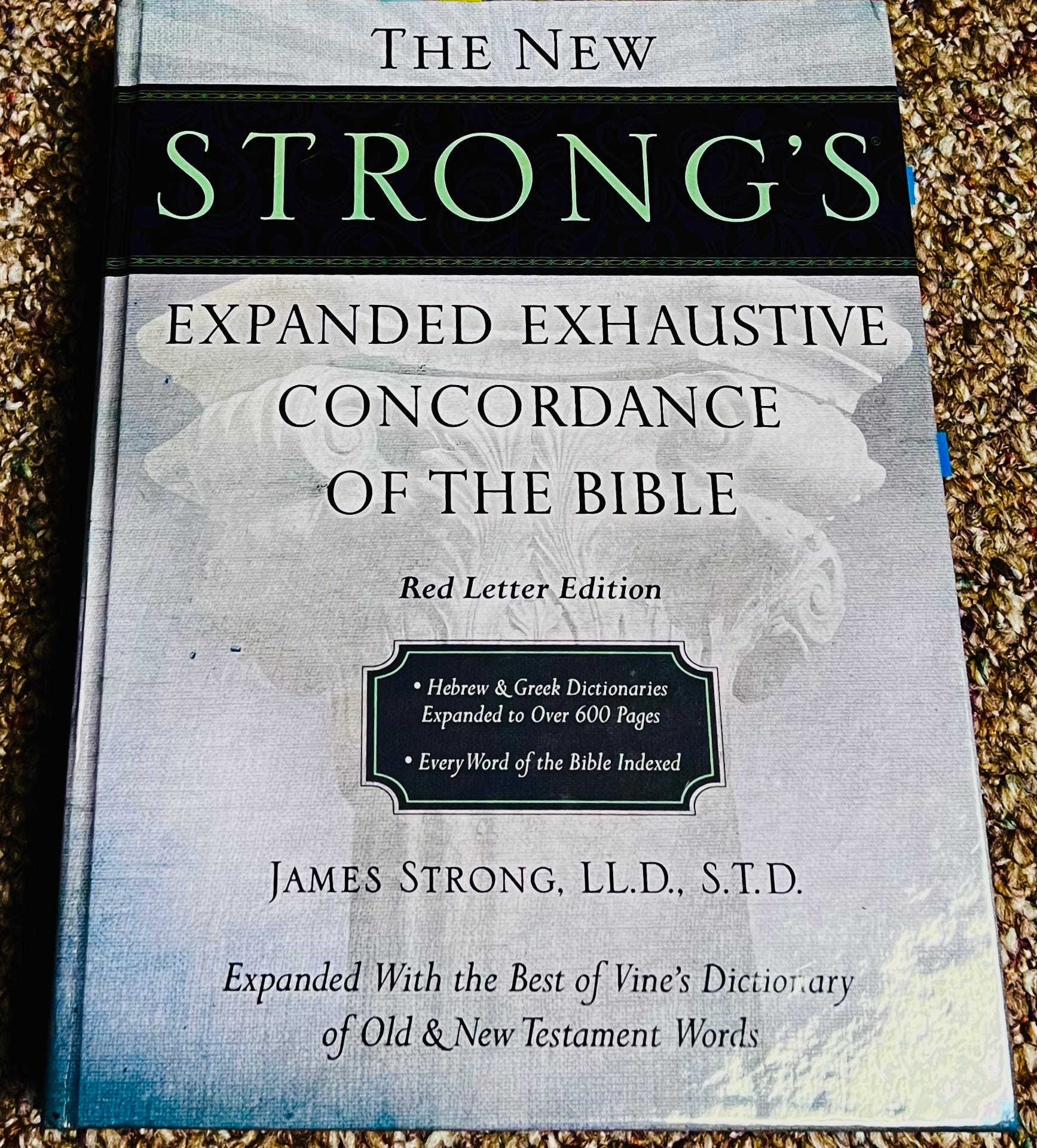
For my study, I turned to Strong’s Concordance, which indexes every word in the Bible. That’s where I began.
First observation: The word “tolerance” itself doesn’t appear even once in the Scriptures. Not a single mention.
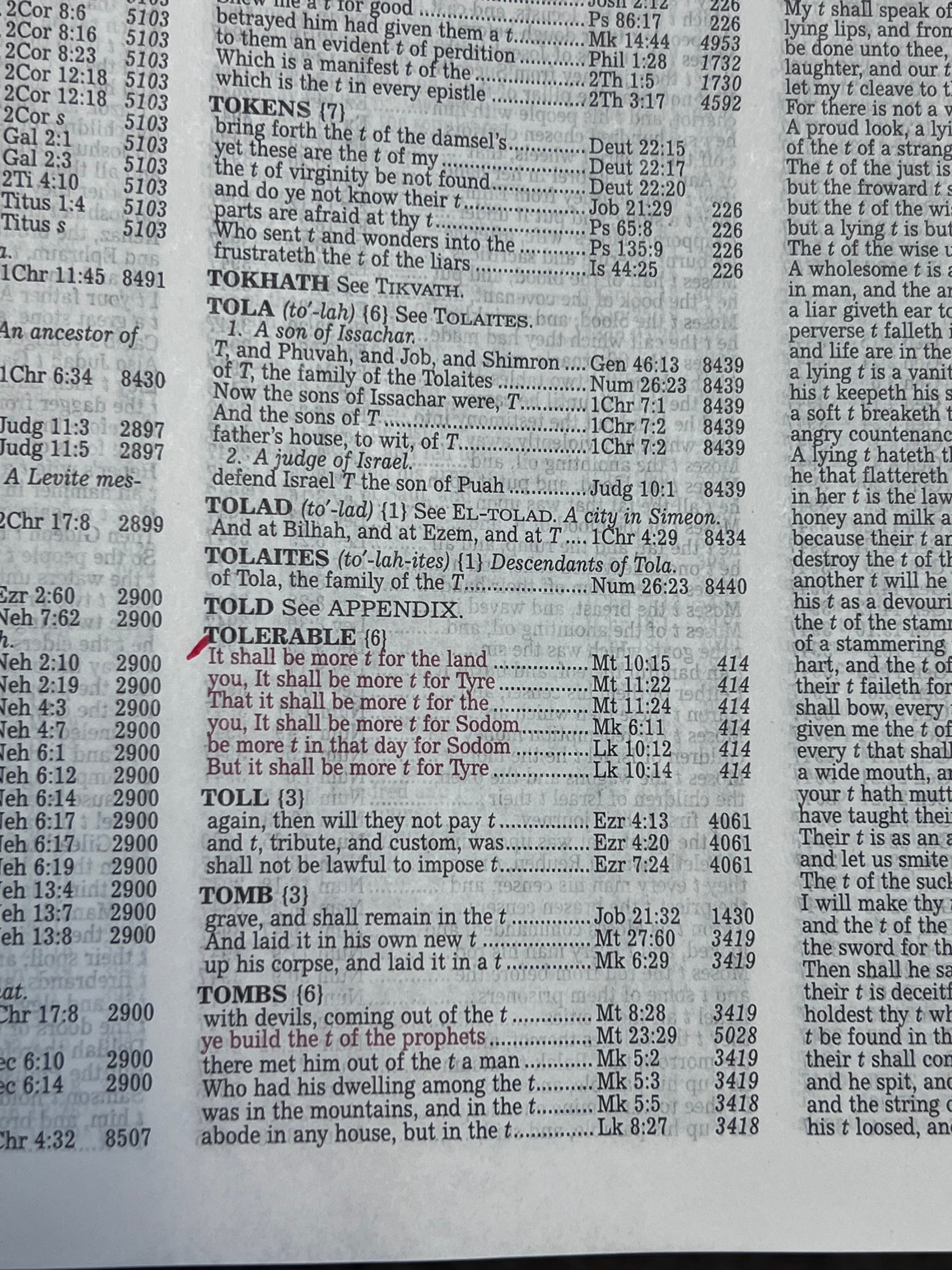
The nearest term is “tolerable,” used in contexts like cities rejecting the disciples or their message, where their judgment would be less tolerable than that of Sodom and Gomorrah.
This wasn’t the kind of “tolerance” I had in mind.
Next, I checked the topical index in the concordance.
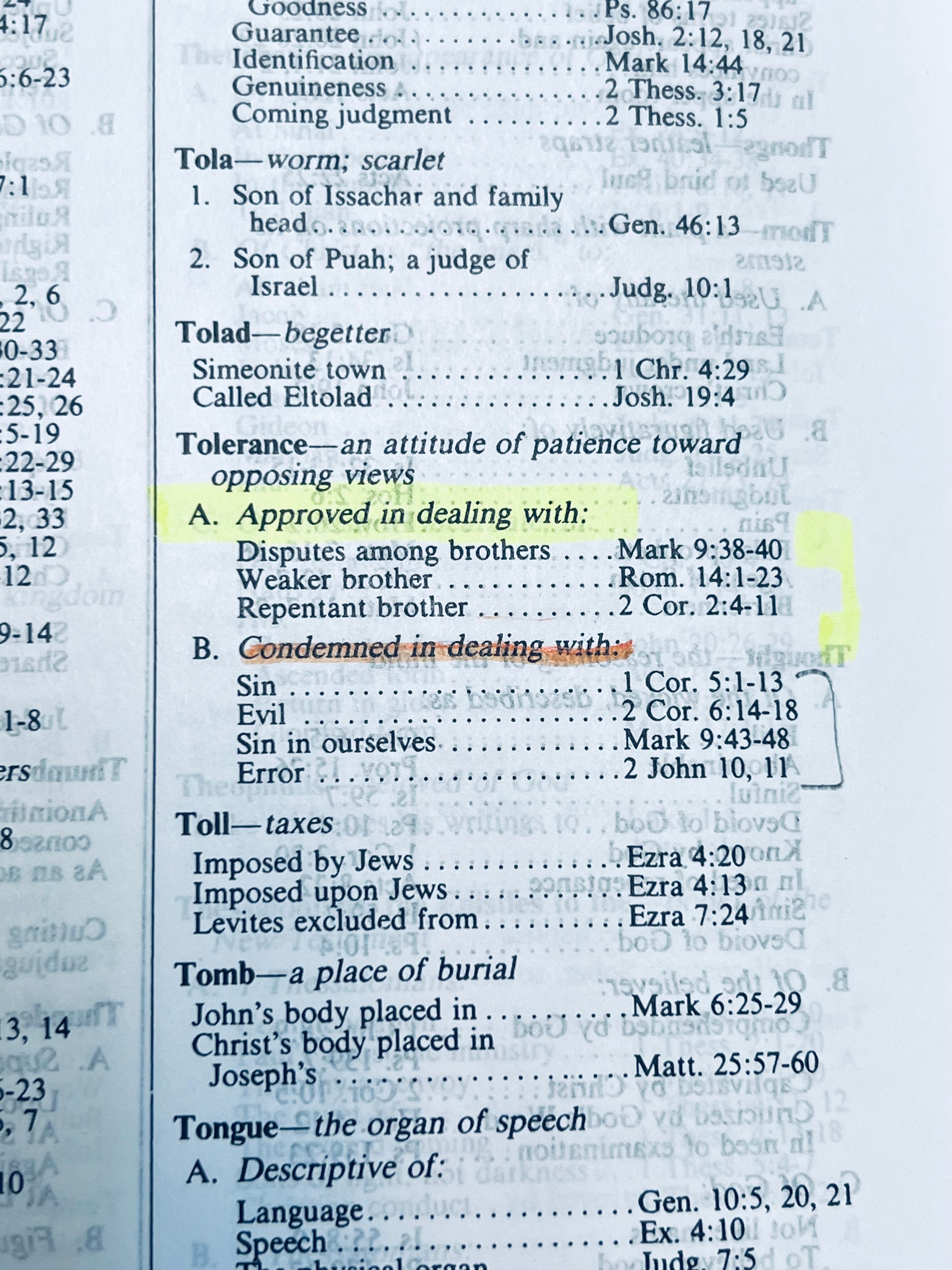
There, tolerance is described as “an attitude of patience toward opposing views.” That sounded closer to what I expected.
But let’s not rush ahead.
The Bible addresses patience toward differing views in two main categories:
Situations Where Tolerance Is Encouraged:
a. Disputes Among Brothers (Mark 9:38-40)
“Now John answered Him, saying, ‘Teacher, we saw someone who does not follow us casting out demons in Your name, and we forbade him because he does not follow us.’ But Jesus said, ‘Do not forbid him, for no one who works a miracle in My name can soon afterward speak evil of Me. For he who is not against us is on our side.’” (Mark 9:38-40 NKJV)
Jesus discourages unnecessary divisions. He encourages John, the other disciples, and us today to extend patience and acceptance to those we might not see as “one of us,” as long as they’re not opposing Him. In essence, if they’re aligned with Christ’s work, they’re on our side.
b. Weaker Brother (Romans 14:1-23)
“Receive one who is weak in the faith, but not to disputes over doubtful things.” (Romans 14:1 NKJV)
We’re advised not to argue with newer or less mature believers over secondary matters, like dietary choices or special observances.
c. Repentant Brother (2 Corinthians 2:4-11)
“So that, on the contrary, you ought rather to forgive and comfort him, lest perhaps such a one be swallowed up with too much sorrow. Therefore I urge you to reaffirm your love to him.” (2 Corinthians 2:7-8 NKJV)
When a fellow believer repents of an offense, we’re called to forgive, comfort, and restore our love for them, preventing overwhelming sorrow.
Notice the common thread?
Christians are urged to show patience within the faith community—toward disagreements on non-essential issues (like food or days), toward those new or growing in faith, and toward repentant offenders. This fosters unity and growth among believers and strengthens the Church.
Situations Where Tolerance Is Condemned (Not Encouraged):
The Scriptures also highlight areas where patience or acceptance isn’t the Biblical response, emphasizing instead the need for discernment, separation, and a commitment to holiness. This isn’t about harsh judgment but about protecting the integrity of our faith and community while still loving others from a distance.
a. Sin (or Persistent Sin Among Professed Believers) (1 Corinthians 5:1-13)
“Your glorying is not good. Do you not know that a little leaven leavens the whole lump?” (1 Corinthians 5:6 NKJV)
“But now I have written to you not to keep company with anyone named a brother, who is sexually immoral, or covetous, or an idolater, or a reviler, or a drunkard, or an extortioner—not even to eat with such a person.” (1 Corinthians 5:11 NKJV)
Here, we’re instructed to distance ourselves from those who claim to follow Christ but persist in serious sins like immorality or greed. This separation isn’t meant to punish but to preserve the purity of the church body and encourage genuine repentance.
b. Evil (2 Corinthians 6:14-18)
“Do not be unequally yoked together with unbelievers. For what fellowship has righteousness with lawlessness? And what communion has light with darkness?” (2 Corinthians 6:14 NKJV)
“Therefore ‘Come out from among them and be separate, says the Lord. Do not touch what is unclean, and I will receive you.’” (2 Corinthians 6:17 NKJV)
This calls for believers to avoid deep entanglements with those whose values oppose God’s ways. It’s a reminder to maintain distinctiveness in our closest relationships, not out of disdain, but to honor God’s call to holiness.
c. Sin Within Ourselves (Mark 9:43-48)
(This focuses on personal self-discipline, so I’ll set it aside for now.)
d. Error (False Teaching) (2 John 1:10-11)
“If anyone comes to you and does not bring this doctrine, do not receive him into your house nor greet him; for he who greets him shares in his evil deeds.” (2 John 1:10-11 NKJV)
We’re warned against welcoming or endorsing those who spread teachings contrary to Christ’s gospel. Extending hospitality or affirmation could unintentionally support deception, so boundaries are advised to safeguard truth.
Extending this pattern, the Bible’s principles on non-tolerance apply thoughtfully to broader political and social contexts as well. These aren’t calls to hostility but to wise engagement, ensuring our actions reflect God’s standards without compromising our witness. For instance:
c. Idolatry or Injustice in Governance (Romans 13:1-7, combined with Exodus 23:2)
While we’re to respect authorities as established by God (Romans 13:1), we’re not to tolerate or participate in systems that promote idolatry, oppression, or injustice. Exodus 23:2 warns, “You shall not follow a crowd to do evil,” urging believers to stand apart from political movements or policies that contradict Biblical justice, such as those endorsing exploitation or false worship. In practice, this might mean prayerfully advocating for righteousness in civic life while avoiding alliances that dilute our faith.
d. Social Practices Opposed to God’s Design (Ephesians 5:11-12)
“Have no fellowship with the unfruitful works of darkness, but rather expose them.” (Ephesians 5:11 NKJV)
In social settings, this extends to not endorsing or normalizing behaviors that the Bible identifies as contrary to God’s order, like those harming human dignity or family structures. Rather than isolation, it’s about gracious separation—engaging society with love and truth, but refraining from participation in or approval of what leads others astray. This could involve community involvement that promotes Biblical values, like compassion and integrity, while gently withdrawing from customs that undermine them.
See the recurring theme?
Christians aren’t called to blanket tolerance of evil, immorality, or falsehood, whether in personal, church, political, or social spheres. Instead, the emphasis is on separation to maintain holiness, while still loving and praying for others (as in Matthew 5:44). We’re not to abandon society entirely but to limit close associations where they might endorse or enable what opposes God. This approach isn’t rooted in hate but in a desire to reflect Christ’s light faithfully, inviting transformation through grace.
So next time someone accuses you of being intolerant or that you’re betraying your faith when you oppose sin, evil, and false teaching, explain the Biblical meaning of tolerance to them.
Hold the Line on Your Faith!